Monday, September 20, 2010
We will fight them. . .
Well, I've remove all of the worm eaten comb and consolidated the girls into one hive. Hopefully the bee population density in one hive body will be large enough that they can control the pests themselves. My biggest concern is that it is late in the year and a lot of honey and pollen was destroyed. I am still feeding them and will continue to do so.

The End of Days?


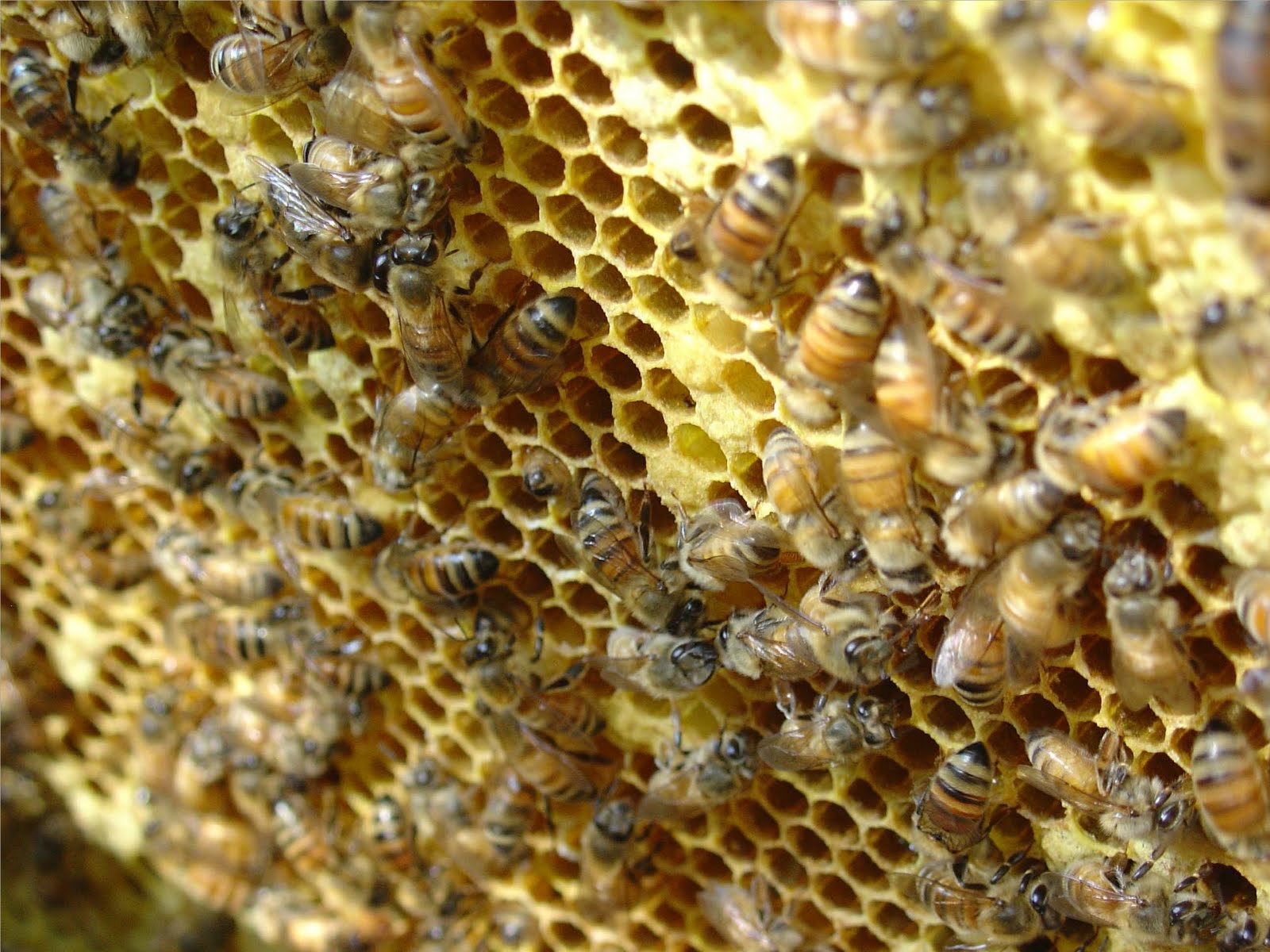
Wax moth catastrophe. I don't have much to say about this, but it looks pretty grim for the girls. Not sure what happened but here is my supposition: Colony is weak from being queenless and possibly tracheal mites. I was housing the weak colony in two hive bodies. It was too large a space for the girls to patrol and the moths got in, wreaking havoc all the way.
Tuesday, September 14, 2010
The Xerces Society 2011 Bee Calendar
This is a link via a friend of mine. I don't know much about the Xerces Society but the calendars are nice and it looks like a good cause.
Here is their mission statement.
Started feeding the bees again yesterday with a 1 to 1 sugar solution. I guess I keep this up for the rest of the winter but I will double check on that. Only a couple more things in the area left to bloom and the ladies can probably use the extra juice. I think the population, though smaller than it once was, has stabilized. I am still supplying them with grease patties and menthol for tracheal mites. I will remove the menthol in about 2 more weeks.
Wednesday, August 18, 2010

Good News. Just got finished checking the mite board and only found 4 mites on the whole board in a 3 day period. That's just 1.3 mites per 24 hour period well below the acceptable 60-190 mites for this area at this time of year. The mite board is a white plastic sheet that you smear with petroleum jelly and place under the hive. Leave it in for 1 to 3 days and the jelly traps the Varroa mites that fall from the hive. You can then calculate the number of mites fallen in a 24 hour period and assess the mite population and pest management needed for your hive. Varroa are a very nasty pest that can lead to the death of a colony.
On another note here is a photo of a local sheriff's car recently covered in a swarm of bees.
Tuesday, August 17, 2010
Taking Care of Bees-ness
I ordered the menthol yesterday. Hopefully it will take take of any possible mite issue without the use of some rather nasty chemicals. Along with it I also ordered a frame perch, an entrance reducer and a couple of Imrie shims. Though it's a way off I have started thinking about the winter.
Monday, August 16, 2010
Long Time Gone
Well, it's been a long time since I have posted anything. The hive has had ups and downs. Lately it seems to be mostly downs. I had to re-queen last week. I don't know where the first lady went but it was obvious she was no longer home. I examined the hive last Monday, August 8, to find it in disarray. No real pattern to comb development, aggressive bees, one maybe two queen cells, and seemingly a reduced population. Also very little brood with no eggs in evidence. Don't know if the first lady swarmed off or died. Haven't been able to get in to look regularly due to when the weather cooperated with my days off.
Anyway, I ordered a new queen on Monday, August 9th, and installed her on Tues the 10th. Went back in today. She is out and hopefully doing her job. The bees are less aggressive at least. Didn't see many eggs but I didn't poke around too much. Don't want to disturb them any more than necessary right now.
I am also worried about trachael mites. I think I have seen several bees with the tell tale K wing deformation which indicates this might be a possibility. Not an expert yet but there are a couple of things I can do which won't harm the bees and are fairly simple. I have given them grease patties, which are a mix of crisco, sugar and honey. The bees will eat the sugar and be lightly coated with the grease which, though it won't harm the bees, will make it harder for the mites to hitch a ride. I am also going to order some menthol packets which, when placed in the hive, act as mite repellent. Fingers crossed.
Anyway, I ordered a new queen on Monday, August 9th, and installed her on Tues the 10th. Went back in today. She is out and hopefully doing her job. The bees are less aggressive at least. Didn't see many eggs but I didn't poke around too much. Don't want to disturb them any more than necessary right now.
I am also worried about trachael mites. I think I have seen several bees with the tell tale K wing deformation which indicates this might be a possibility. Not an expert yet but there are a couple of things I can do which won't harm the bees and are fairly simple. I have given them grease patties, which are a mix of crisco, sugar and honey. The bees will eat the sugar and be lightly coated with the grease which, though it won't harm the bees, will make it harder for the mites to hitch a ride. I am also going to order some menthol packets which, when placed in the hive, act as mite repellent. Fingers crossed.
Subscribe to:
Comments (Atom)